


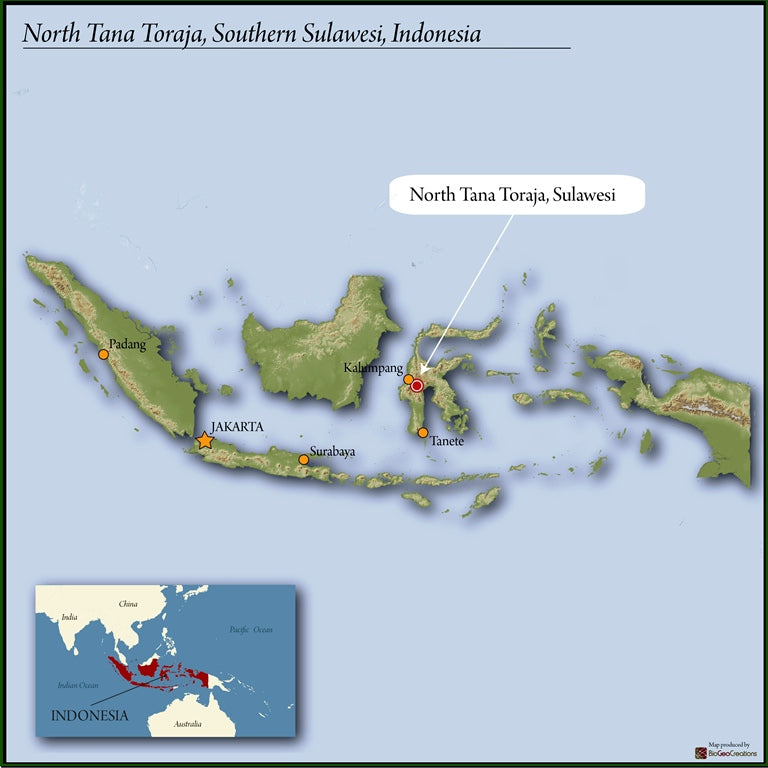


Sulawesi Toraja
Sulawesi is a starfish shaped island, far older than the rest of the Indonesian archipelago, with a complex geography that includes thousand-foot rock walls exploding vertically out of rice paddy fields and capped in perpetual mist.
REGION : Buntu Minanga and Sapan, Buntu Pepasan, Toraja Utara Regency, South Sulawesi, Indonesia
SOURCE : Producers organized around the Cooperative of Toraja Coffee Growers
VARIETY : Catimor, S-795, Typica
PROCESS : "Giling Basah" - Semi-washed and wet hulled after pulping, then dried in the sun.
SOIL : Andosol
ALTITUDE : 1400-2000 masl
ROAST LEVEL : 3/5
AROMA : Nutty, Sweet
FLAVOR : Chocolate, Caramel, Dried Berries
ACIDITY : Low
BODY : Heavy, Creamy
WHY WE LIKE IT : Beautiful example of an Indonesian offering
RECOMMENDED FOR : Someone looking for a rich, full bodied cup with mellow acidity
The Torajan tribe, living in the central mountain region of the South Sulawesi province, continue to maintain a traditional village lifestyle that includes houses that resemble boats. The growing region has a complex geography that includes humid low-land rice paddies flanked by thousand-foot rock walls capped in perpetual mist.
Coffee is grown in this geographic wonderland at elevations that reach 2000 MASL, considered to be some of the highest growing elevations in all of Indonesia. In recent years, producers who cultivate and harvest coffee on farms that average less than 3 acres in size have been organizing and building community micro-mills to improve their processing standards. At these mills, each producer carefully sorts their harvested cherries, depulps, ferments overnight, washes, and lays wet parchment out on patios to shed water. Next the coffee takes a detour from the conventional path of processing in other origins, wherein, the coffee parchment is removed while the coffee still has a high moisture content. This wet-hulling process, called Giling Basah in the Indonesian language, leaves the coffee bean exposed while drying on patios to a moisture percentage acceptable for export and gives the bean its unique bluish color and the hallmark Indonesian profile.
Local producer groups have also begun to partner with regional exporters like Indokom to overcoming logistical challenges like rugged roads and lack of infrastructure. Indokom provides logistics and milling facilities, which improves traceability and quality control throughout the post-harvest process, as well as, the ability to swiftly bring the coffee to the international market, ensuring greater producer earnings from direct trade relationships.
Free 30 Days Returns
Free shipping on orders over $50